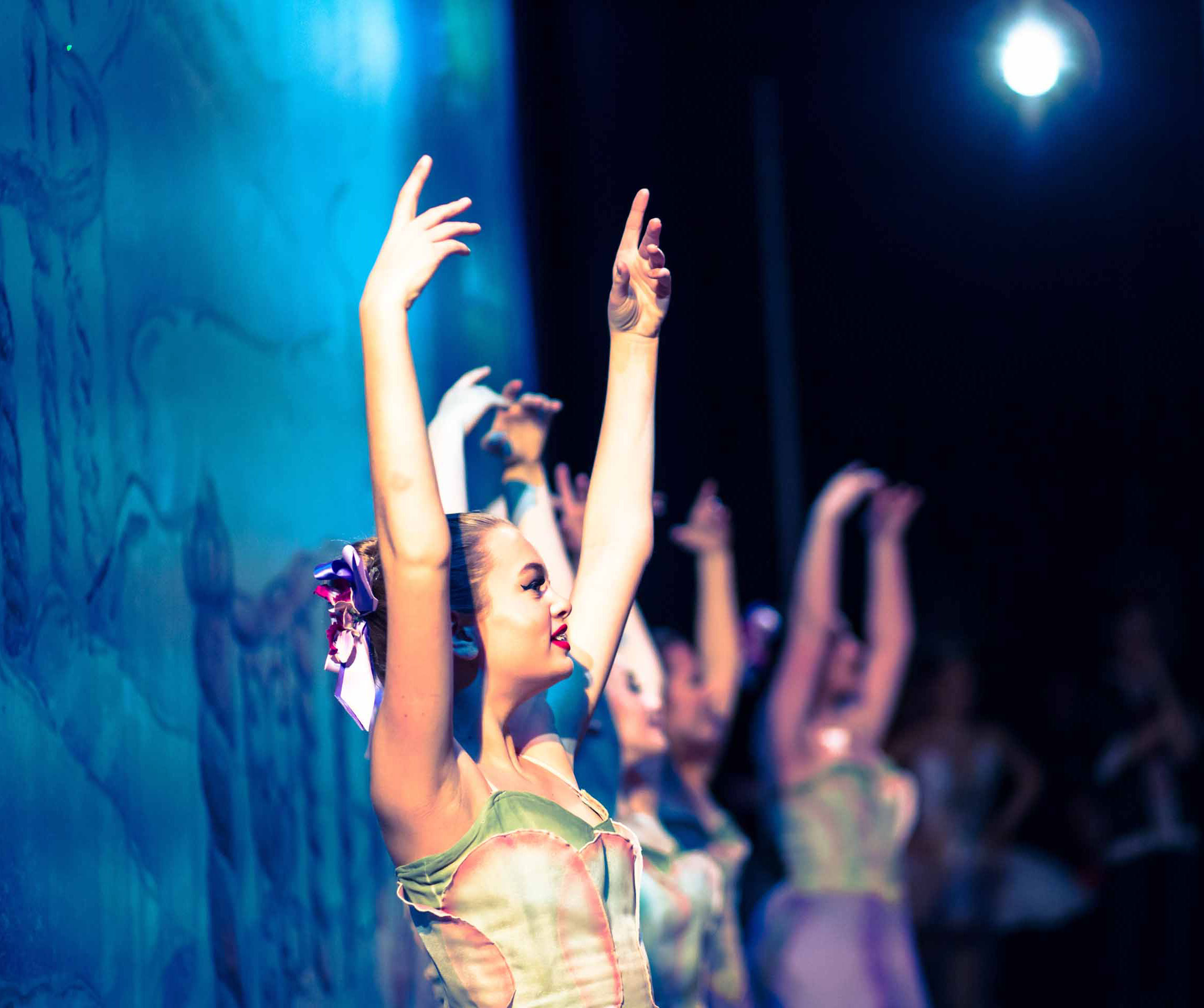
 Classical Ballet: Features the finest elements of the French, Italian, Danish, English, and Russian schools. Faculty prepares the dancer for the need to adapt as a professional to each technique. This American school is known to prepare dance students for all venues in dance.
Pointe: Dancers begin pointe work if they are physically strong enough with good body alignment to go onto toe. Not every body-type is suitable for this work. You may continue in your level and not begin pointe until a later date. At times, a doctor’s approval is necessary.
Variations: Learning solos, duets, trios from the great classics; such as Sleeping Beauty, Coppelia, and Nutcracker.
Pre-pointe: With a stronger shoe, this class works posture and strengthens legs, and feet for pointe work.
Character Dance: With its infinite possibilities, character dance is difficult to define briefly. In relationship to classical ballet, it is usually thought of as folk dance, but it is best defined as all of those qualities not present in classical dance. Character dance can be divided into the following classification: National dance – Dramatic and Lyrical Character – Satire – Grotesque and Eccentric Mimicry.
Jazz: A variety of theatrical dance. Rhythmic dancing usually danced to contemporary music.
Modern: A style of theatrical dancing that rejects classical ballet’s upright stance and, instead, embraces gravity; movements are expressive of feelings and feature elements from many different modern dance styles.
Musical Theatre Dance: A jazz warm-up with dances from Broadway musicals.